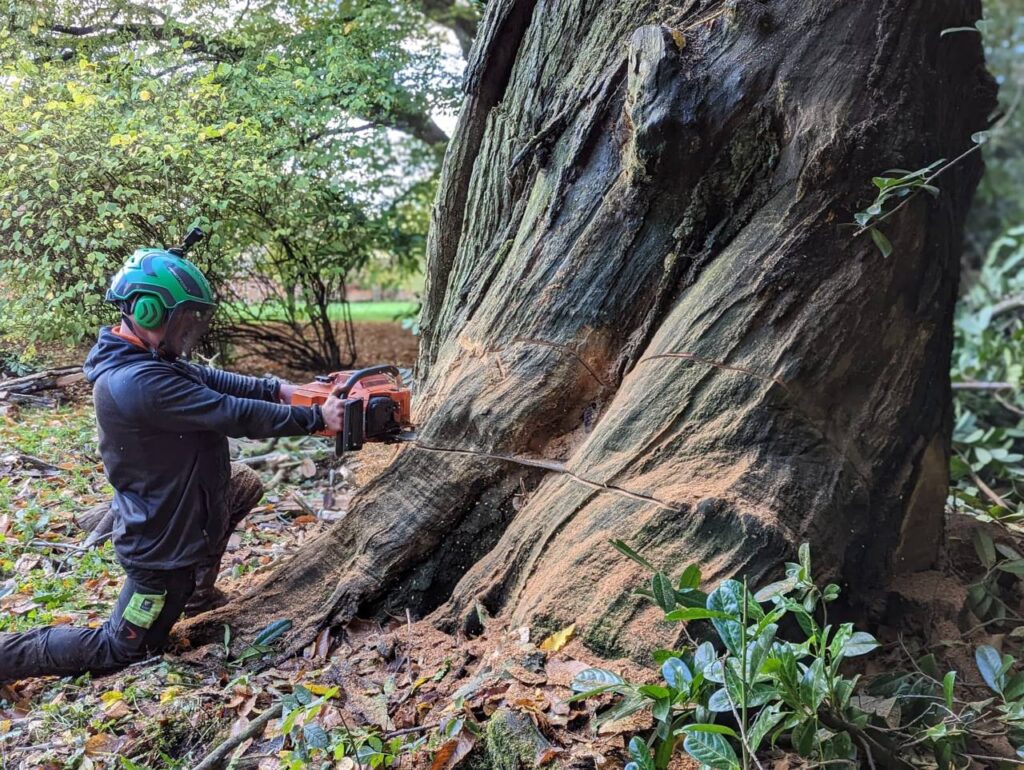
Mature trees can be some of the most attractive features in a garden, providing structure, character, greenery and seasonal interest. However, trees continue growing throughout their lives, and a specimen that once fitted comfortably into its surroundings can eventually become disproportionately large for the available space. An expanding crown may dominate the garden, overhang buildings, restrict light or interfere with other areas of the landscape.
When this happens, removing the tree is not necessarily the first or only option. Professional tree surgery can often manage excessive growth while retaining the tree as an important feature. For property owners in Tamworth, Kent, Tamworth Tree Surgeons can assess mature trees and determine whether careful pruning, crown reduction or other appropriate work could restore a better balance between the tree and the garden.
How Does a Mature Tree Begin to Dominate a Garden?
Trees can change considerably over many years. As the crown expands upwards and outwards, branches begin occupying areas that were previously open.
Signs that a tree may be becoming too dominant include:
- Large branches extending across much of the garden
- Excessive shading of lawns and planting areas
- Branches growing towards the property
- Growth extending over patios or pathways
- Crowding of neighbouring plants
- An increasingly unbalanced crown
- Reduced usable space beneath the tree
The objective of professional tree surgery is to understand which aspects of the tree’s growth are causing problems and identify an appropriate response.
Crown Reduction Can Manage Overall Size
Crown reduction is one of the techniques that may be considered when a mature tree has become too large for its surroundings.
Rather than simply removing branches randomly, crown reduction involves carefully reducing the height and/or spread of the canopy while maintaining an appropriate natural form.
When suitable for the individual tree, this can help:
- Reduce excessive crown spread
- Create greater clearance from nearby features
- Improve the relationship between the tree and garden
- Manage particularly long or heavy branches
- Retain a balanced appearance
Professional judgement is essential because different tree species respond differently to pruning.
Tree Surgery Can Help Reclaim Garden Space
A mature canopy can gradually occupy a surprisingly large proportion of a garden.
Low or spreading branches may extend over lawns, seating areas, paths and planting beds. Appropriate pruning can sometimes create greater clearance and make these areas more practical again without unnecessarily removing the entire tree.
The result should not be an unnaturally stripped tree. Good tree surgery aims to create a more suitable relationship between the tree and the space surrounding it.
Managing Branches Growing Towards the Property
Trees growing close to homes need particular attention because their branches can gradually extend towards roofs, gutters and exterior walls.
Overhanging growth may:
- Brush against roofing materials
- Drop leaves and small debris onto the roof
- Restrict access around the building
- Extend increasingly close to windows
- Create unwanted contact during windy conditions
Selective professional pruning can provide appropriate clearance while considering the overall structure of the crown.
Improving Light Without Excessive Pruning
One common concern with large mature trees is the amount of shade they create.
As the canopy becomes denser and broader, sunlight reaching the garden can change considerably. Lawns, planting areas and outdoor seating spaces may receive much less direct light than previously.
Depending on the tree, carefully planned crown work may help improve light penetration without removing excessive amounts of growth.
The aim is to achieve a sensible balance rather than opening the canopy aggressively.
Why Simply Cutting Back Every Branch Is Not the Answer
When a tree feels too large, heavily cutting the entire crown can seem like an obvious solution. In practice, indiscriminate pruning can leave a poor shape and encourage undesirable future growth.
Tree pruning needs to account for:
- Species
- Age
- Existing structure
- Branch positions
- Tree condition
- Desired outcome
Professional tree surgeons determine where cuts should be made and how much material can appropriately be removed.
This produces a much more considered result than simply making the tree smaller at any cost.
Crown Lifting May Improve Clearance
Sometimes the overall size of the tree is not the main issue. Instead, lower branches may be interfering with the way the garden is used.
Where appropriate, crown lifting involves removing selected lower branches to increase clearance beneath the canopy.
This can help improve access around:
- Garden paths
- Lawns
- Seating areas
- Driveways
- Other frequently used outdoor spaces
It can allow homeowners to make better use of the area beneath a mature tree while retaining much of its established canopy.
Selective Pruning Can Address Specific Problem Branches
Not every mature tree needs comprehensive crown work.
Sometimes only particular branches are causing concern. They may extend disproportionately far from the crown, interfere with surrounding features or make the tree appear unbalanced.
Selective pruning can target these areas while retaining as much healthy growth as possible.
This measured approach is often preferable where the majority of the tree fits comfortably within the garden.
Removing Dead or Damaged Branches Is Also Important
A mature tree that has not received attention for some time may contain dead, damaged or weakened branches alongside healthy growth.
Removing unsuitable branches can form part of professional tree maintenance and may also improve the overall appearance of the canopy.
An assessment can identify:
- Dead branches
- Broken limbs
- Damaged growth
- Branches rubbing against one another
- Areas requiring closer attention
Managing these issues alongside growth control creates a more comprehensive approach to tree care.
Good Tree Surgery Preserves Natural Shape
One of the clearest differences between skilled tree surgery and uncontrolled cutting is the finished appearance.
A mature tree should still look like a mature tree after appropriate pruning. The aim is generally to retain its character while bringing its proportions into better balance with the garden.
Professional tree reshaping considers the complete canopy so that pruning does not leave obvious gaps, an unnecessarily harsh outline or an uneven distribution of branches.
Why Mature Trees Need an Individual Assessment
There is no single pruning method suitable for every large tree.
Before recommending work, an experienced tree surgeon should consider factors including:
Species
Different trees tolerate different types and amounts of pruning.
Tree condition
Healthy growth, damaged sections and structural characteristics all influence the work that may be appropriate.
Position
The relationship between the tree, property and surrounding garden needs to be understood.
Desired outcome
Reducing shade, creating clearance and controlling overall size may require different approaches.
Future growth
Tree surgery should consider how the canopy is likely to develop after pruning, not simply how it looks immediately afterwards.
This individual assessment is particularly important with established trees.
Regular Maintenance Can Prevent the Same Problem Returning Quickly
Tree surgery is often most effective when considered as part of long-term garden maintenance.
Allowing a tree to become excessively large before carrying out severe work is not always the best approach. Appropriate periodic attention can help manage growth more gradually and maintain a suitable canopy over time.
This may help:
- Maintain clearance
- Preserve a balanced crown
- Control excessive spread
- Reduce the need for more substantial future pruning
- Keep the tree proportionate to the garden
A planned approach is generally preferable to repeatedly reacting once the tree has become difficult to manage.
When Might Tree Removal Be Considered?
Professional tree surgery can resolve many problems associated with excessive growth, but pruning is not always the appropriate solution.
In some circumstances, the tree’s condition, position or overall suitability for the space may mean that removal needs to be considered.
The important point is that this decision should follow proper assessment. A mature tree should not automatically be removed simply because it has become large if suitable management can achieve the desired outcome.
Professional Tree Surgery in Tamworth
At Tamworth Tree Surgeons, we provide professional tree surgery services throughout Tamworth, Kent, with work tailored to the condition, size and position of individual trees.
If a mature tree has begun dominating your outdoor space, we can assess how its growth is affecting the garden and determine whether crown reduction, selective pruning, crown lifting or other appropriate tree surgery could improve the situation.
Our focus is on managing trees carefully while helping property owners create gardens that remain practical, attractive and enjoyable.
Conclusion
A mature tree taking over the garden does not necessarily need to be removed. Professional tree surgery can often manage excessive growth, improve clearance, reduce unwanted shading and bring an oversized canopy back into better proportion with its surroundings.
The key is choosing the correct type of work for the individual tree. Heavy or indiscriminate cutting can create further problems, whereas carefully planned pruning considers the tree’s structure, condition and future development.
For property owners in Tamworth, Kent, Tamworth Tree Surgeons can professionally assess mature trees and recommend an appropriate approach to managing their growth. If a tree is beginning to dominate your garden, contact our team to discuss how professional tree surgery could help restore a more practical and balanced outdoor space.
Call us on: 01827 214 496
Click here to find out more about Tamworth Tree Surgeons
Click here to complete our contact form and see how we can help with your trees needs.